Driveway Cleaning Christchurch: The Complete 2026 Guide to Safe & Effective Concrete Cleaning
Driveway Care

Driveway Cleaning Christchurch: The Complete 2026 Guide to Safe & Effective Concrete Cleaning

Rise & Shine TeamJune 25, 20267 min read
HomeGuidesDriveway Care

Slippery, stained driveways are a safety hazard and a kerb-appeal killer. This comprehensive guide covers the best methods for driveway cleaning in Christchurch — from concrete to pavers — plus costs, frequency, and why professional water blasting beats DIY every time.

In This Article

1Why Christchurch Driveways Get Dirty So Fast

Christchurch's climate is uniquely tough on exterior surfaces. The combination of cold, damp winters and high UV summers creates ideal conditions for moss, algae, lichen, and biofilm to colonise driveways rapidly — often within 6–12 months of a professional clean.

Suburbs with significant tree canopy — such as Fendalton, Ilam, Merivale, and Cashmere — experience faster regrowth due to reduced sunlight and higher moisture levels beneath the shade. Meanwhile, lower-lying areas like Hornby, Wigram, and parts of Halswell deal with clay-heavy soils that splash onto concrete during winter rains, leaving persistent brown staining.

For rental properties and those preparing for sale in areas like Riccarton, St Albans, and Papanui, a clean driveway is one of the most visible — and cost-effective — improvements you can make.

2The Real Dangers of a Dirty Driveway

A grimy driveway is not just an aesthetic problem. Algae and moss create a layer of biological film on concrete surfaces that becomes dangerously slippery when wet — a significant liability for homeowners, especially during Christchurch's notoriously icy winter mornings.

Slip hazards: The ACC (Accident Compensation Corporation) reports thousands of preventable slip-and-fall injuries in New Zealand every year, many on residential properties.

Surface degradation: Lichen secretes organic acids that chemically etch into concrete, permanently weakening the surface over time. Left untreated for years, this can require expensive resurfacing or replacement.

Oil and tyre staining: Petroleum-based stains penetrate porous concrete and become nearly impossible to remove without professional-grade degreasers and high-pressure equipment.

Property value impact: A stained, green-tinged driveway is the first thing buyers and tenants see. It signals neglected maintenance and can meaningfully lower an appraisal or the number of interested parties at an open home.

3Water Blasting vs Soft Washing: Which Is Right?

For driveways, high-pressure water blasting is generally the correct method — unlike roofs and house cladding where soft washing is often safer. However, the specific approach still depends on the surface material:

High-Pressure Water Blasting (best for most driveways)

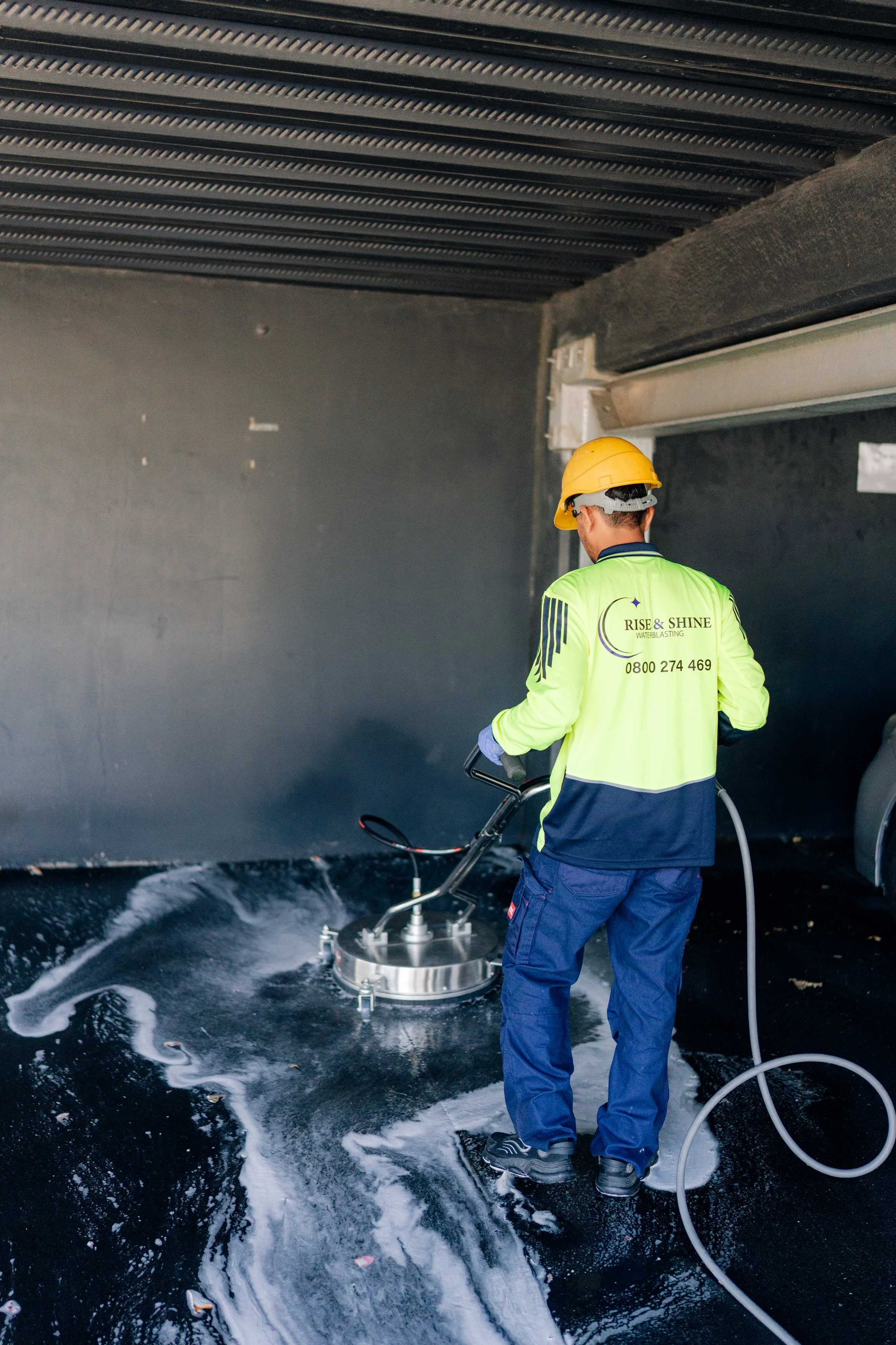
Using commercial-grade equipment operating at 2,000–4,000 PSI with a rotating surface cleaner attachment, professional water blasting strips moss, algae, tyre marks, oil, and embedded dirt from concrete without chemical residue. The rotating head ensures even cleaning pressure without "striping" the surface — a common problem with amateur equipment.

Soft Wash Pre-Treatment (for heavily infested surfaces)

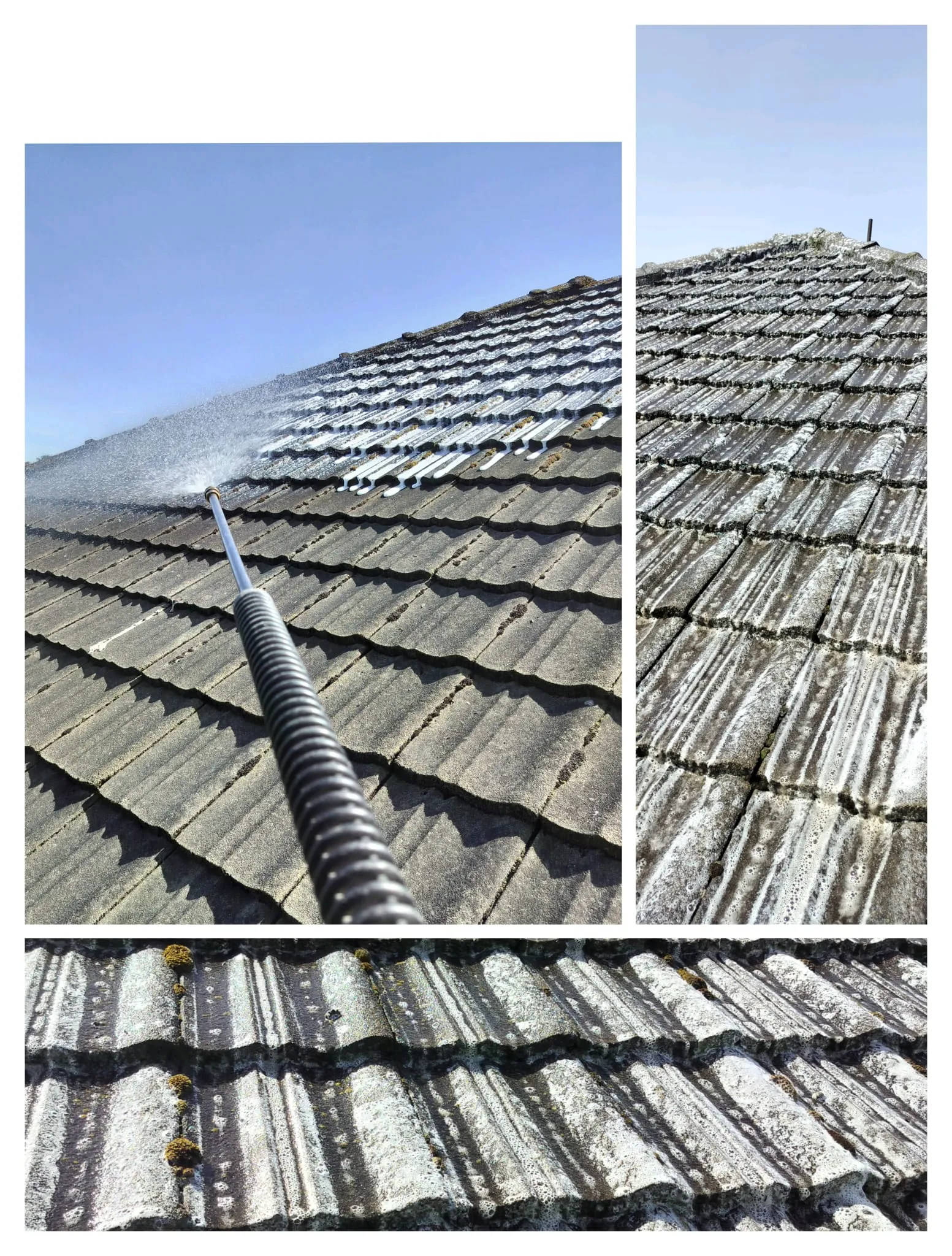
For driveways with thick lichen or deep-rooted moss, a professional-grade biocide is applied first to kill the organic matter at the root. The chemical dwell time (15–30 minutes) loosens the bond between the growth and the concrete, making the subsequent pressure wash far more effective and reducing the risk of regrowth.

Rise & Shine technicians assess every driveway individually before recommending the right approach — we never apply a one-size-fits-all method.

4Concrete, Pavers & Asphalt: Surface-Specific Advice

Different driveway materials require different pressures and techniques:

Plain concrete: The most robust driveway surface — handles high pressure well. Rotating surface cleaners leave an even, streak-free finish. Old or damaged concrete may require lower pressure to avoid loosening aggregate.

Coloured/exposed aggregate concrete: Requires slightly lower pressure to protect the coloured sealer and aggregate bond. Often benefits from a light sealer application after cleaning to restore colour depth.

Concrete pavers (Oamaru stone, tumbled brick): Use medium pressure with a fan nozzle. The joints between pavers are vulnerable to high pressure, which can wash out polymeric sand — this may need to be topped up after cleaning.

Asphalt driveways: Lower pressure is essential. High pressure on asphalt can loosen the aggregate and accelerate surface wear. A specialist soft-wash approach is recommended for asphalt.

Timber or composite boardwalks: Low-pressure soft wash only. High pressure will raise grain and splinter timber, permanently damaging the surface.

5How Often Should You Clean Your Driveway?

The ideal frequency depends on your property's exposure, surrounding vegetation, and how the driveway is used:

Standard residential concrete: Every 12–18 months in most Christchurch suburbs.

High-shade or high-tree-canopy areas: Every 9–12 months (Fendalton, Cashmere, Ilam, Merivale).

Commercial and high-traffic driveways: Every 6–9 months, or more frequently if oil or grease is an issue.

Pre-sale preparation: On-demand — ideally 2–4 weeks before listing to allow the surface to fully dry and look its best in listing photography.

Rental properties: At least every 12 months as part of a routine maintenance programme. Many landlords schedule annual cleans between tenancies.

Applying an inhibitor treatment after cleaning extends the clean by slowing biological regrowth — a service Rise & Shine offers as part of our premium driveway packages.

6DIY vs Professional Driveway Cleaning

Consumer-grade pressure washers (typically 1,000–1,800 PSI) are available at most hardware stores, and many homeowners attempt to use them on driveways. Here's the honest comparison:

DIY Limitations

Lower pressure means moss and lichen roots survive and regrow within weeks rather than months.

Without a rotating surface cleaner head, results are uneven — "wand striping" leaves visible line patterns.

Consumer biocides are far weaker than professional-grade products, meaning less effective treatment.

Physical fatigue makes it difficult to clean a full driveway to a consistently high standard.

Professional Advantages

Commercial-grade equipment (2,000–4,000+ PSI) with proper surface cleaner heads eliminates growth at the root.

Professional technicians carry public liability insurance — if anything goes wrong, you're protected.

Eco-friendly, biodegradable chemical treatments safe for garden borders and stormwater systems.

Satisfaction guarantee — if you're not happy, we return at no extra charge.

For most Christchurch homeowners, a professional driveway clean costs less than a tank of petrol per year — and the results last dramatically longer.

7What Does Driveway Cleaning Cost in Christchurch?

Driveway cleaning pricing in Christchurch depends on the size of the area, degree of staining, surface material, and any chemical pre-treatment required. As a general guide:

Small single-car driveway (up to 30m²): $120–$200

Standard double driveway (30–60m²): $200–$350

Large driveway + paths + patio (60–100m²+): $350–$550+

Chemical pre-treatment (for heavy lichen): Add $50–$120

Sealing after clean: Available as an add-on — price on application

Multi-service discounts are available when combining a driveway clean with house washing, roof washing, or deck restoration — often the best value option for full property refreshes ahead of spring or a property sale.

All Rise & Shine quotes are free, no-obligation, and provided after a site assessment to ensure accurate pricing — no hidden costs, no surprises.

8After the Clean: Keeping It Pristine Longer

To maximise the life of your clean driveway:

Apply an inhibitor treatment: A zinc or copper-based inhibitor slows moss and algae regrowth by 12–18 months. Rise & Shine includes this in premium packages.

Sweep regularly: Remove leaf litter and debris — organic matter accelerates the growth of mould and moss.

Manage tree coverage: Consider trimming overhanging branches to allow more UV light to reach the driveway surface. Sunlight is the most effective natural deterrent to biological growth.

Address oil spills immediately: Fresh oil stains are far easier to remove than those that have soaked into the concrete over weeks. Absorbent kitty litter applied immediately, followed by a degreaser, can minimise the impact.

Reseal periodically: Concrete sealers protect against staining and moisture absorption, significantly slowing the accumulation of dirt and organic growth. Ideally reapplied every 3–5 years.

Need a professional assessment? Contact Rise & Shine today for a free driveway cleaning quote across all Christchurch suburbs.

Tagged:

#Driveway Cleaning#Christchurch#Concrete Cleaning#Water Blasting#Canterbury

Need advice on Driveway Care?

Get a free, no-obligation expert recommendation and quote from the Rise & Shine Water Blasting team. Serving Christchurch & Queenstown.